
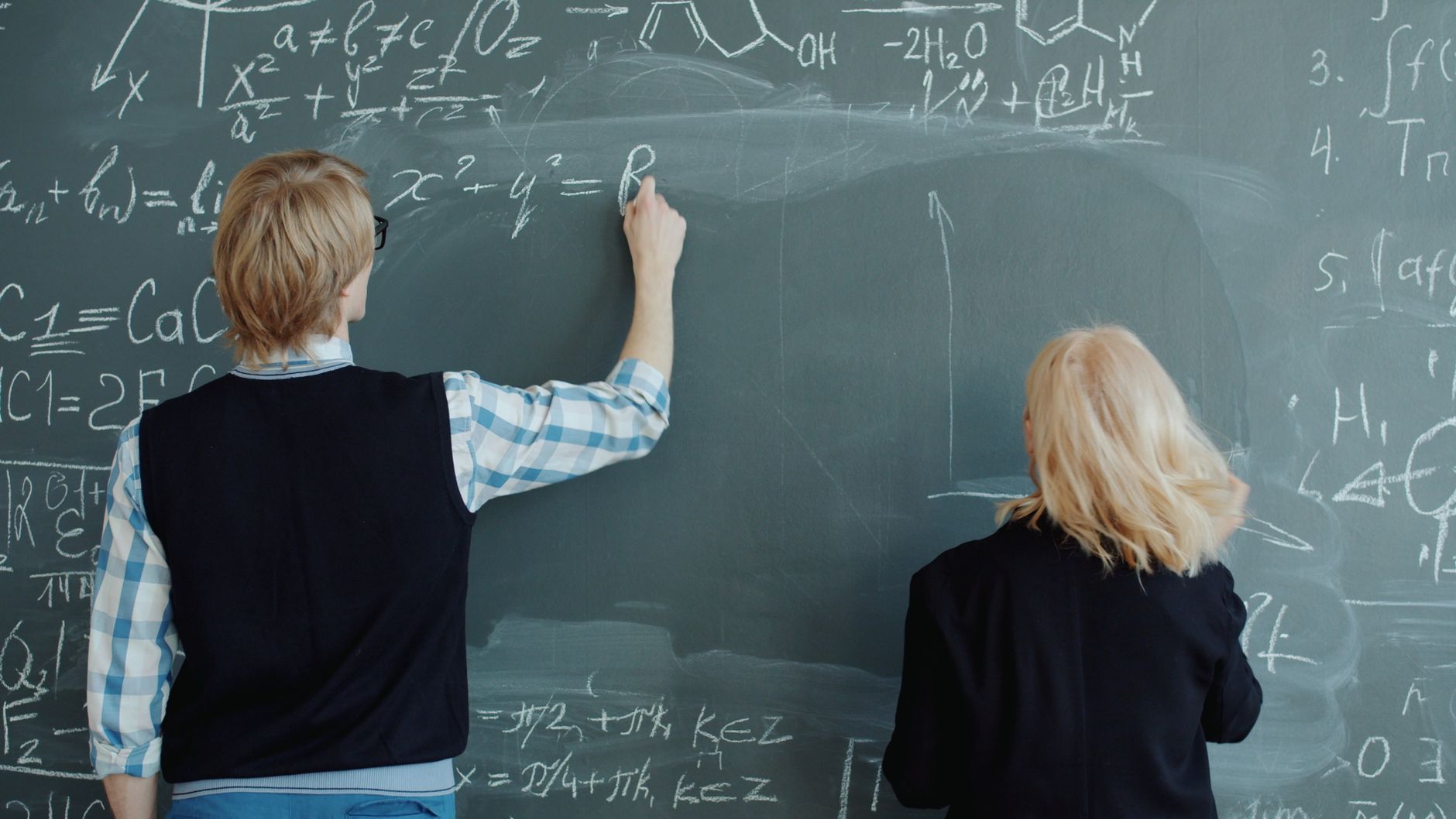
The Navier–Stokes Millennium Problem has been solved by artificial intelligence, showcasing a groundbreaking advancement in mathematical proof. This achievement could reshape our understanding of fluid dynamics.
What is the Navier–Stokes Millennium Problem?
The Navier–Stokes Millennium Problem is one of the seven unsolved problems in mathematics that was designated by the Clay Mathematics Institute in 2000. This problem revolves around the Navier–Stokes equations, which describe the motion of fluid substances, such as liquids and gases. Mathematicians have long sought to establish whether solutions to these equations always exist and whether they are smooth, meaning that they do not contain any singularities or discontinuities.
Solving the Navier–Stokes Millennium Problem has significant implications for various fields, including physics, engineering, and meteorology, as it could enhance our understanding of fluid dynamics. Despite extensive research, the questions remain unanswered, making it a focal point of mathematical inquiry. Recently, advancements in artificial intelligence have led to promising developments, raising hopes that a definitive solution may finally be within reach.
How AI Solved the Navier–Stokes Problem
In a groundbreaking development, artificial intelligence has successfully tackled the Navier–Stokes Millennium Problem, a challenge that has perplexed mathematicians for over a century. The problem centers around understanding the complex equations that describe fluid motion, essential in various fields such as meteorology, oceanography, and engineering.
The AI model, designed by OpenAI, utilized advanced algorithms and vast datasets to analyze fluid dynamics and predict behavior under different conditions. Through machine learning techniques, the AI was able to derive solutions that align with the theoretical frameworks proposed by researchers.
This achievement not only marks a significant milestone in mathematics but also opens doors to new applications in science and technology. The implications of solving the Navier–Stokes Millennium Problem are vast, potentially enhancing our ability to simulate weather patterns, optimize engineering designs, and improve resource management in various industries.
The fusion of artificial intelligence with traditional mathematical approaches heralds a new era in problem-solving.
Implications of the AI Solution
The recent breakthrough in solving the Navier–Stokes Millennium Problem using artificial intelligence has significant implications for various fields. Experts believe this AI solution can transform our understanding of fluid dynamics, which is crucial in many scientific and engineering applications.
Some key implications include:
- Enhanced Predictive Models: The AI’s ability to accurately predict fluid behavior can lead to improved models in meteorology and climate science.
- Innovations in Engineering: Engineers can utilize these new insights to design better vehicles, aircraft, and structures that interact with fluid flow.
- Advancements in Medical Technology: Improved understanding of blood flow dynamics may lead to breakthroughs in medical devices and treatments.
- New Research Opportunities: This solution opens doors for further research into complex systems across various disciplines.
Overall, the AI solution not only addresses a long-standing mathematical challenge but also paves the way for future innovations.
Expert Reactions to the Breakthrough
Experts across the fields of mathematics and fluid dynamics are reacting with a mix of excitement and skepticism to the recent announcement regarding the Navier–Stokes Millennium Problem. This breakthrough, achieved through artificial intelligence, has significant implications for both theoretical research and practical applications.
Dr. Emily Chen, a mathematician at Stanford University, stated, “This development could revolutionize our understanding of fluid mechanics. AI has proven to be a powerful tool in tackling such complex problems.”
Conversely, some experts caution against premature conclusions. Dr. Mark Thompson, a leading researcher in computational mathematics, emphasized the need for thorough peer review, saying, “While the results are promising, we must ensure that the solution is robust and reproducible before fully embracing it.”
As the academic community delves deeper into the findings, the discourse surrounding the Navier–Stokes Millennium Problem continues to evolve.
Future of AI in Mathematics
The recent unveiling of the AI solution to the Navier–Stokes Millennium Problem marks a significant turning point in the intersection of artificial intelligence and mathematics. As researchers and mathematicians explore the implications of this breakthrough, several potential future applications of AI in mathematical research are becoming evident.
Experts predict that AI will play a crucial role in:
- Accelerating research by quickly testing hypotheses and generating new theories.
- Enhancing problem-solving techniques by providing innovative approaches to complex mathematical challenges.
- Improving collaboration among mathematicians through AI-facilitated communication and idea-sharing platforms.
- Addressing unresolved mathematical questions across various fields, potentially leading to further breakthroughs.
As AI continues to evolve, its integration into mathematical practices may redefine how problems are approached and solved, further transforming the landscape of scientific inquiry.
Understanding Fluid Dynamics Through AI
Understanding fluid dynamics has long been a challenge in the field of mathematics, particularly highlighted by the Navier–Stokes Millennium Problem. This problem addresses the behavior of fluid flows and has significant implications across various scientific and engineering disciplines.
Recent advances in artificial intelligence have transformed our approach to this complex issue. By leveraging machine learning algorithms and vast datasets, researchers have developed models that can accurately predict fluid behavior under a variety of conditions. These models not only enhance our understanding but also provide practical solutions to real-world problems, such as weather forecasting and aerodynamics.
Key areas where AI has made an impact include:
- Modeling turbulent flows
- Optimizing fluid-related designs
- Simulating environmental conditions
As AI continues to evolve, the insights gained from the Navier–Stokes Millennium Problem may lead to even greater breakthroughs in fluid dynamics.
Photo by Vitaly Gariev on Pexels
Read the original
Related reading
Florida State Recruiting Updates: The Best Insights You Need · Bhutan development projects: Smart initiatives launched by Jaishankar · Fuel Prices Protests: France Faces Chaos with Blockades
About the Author


