
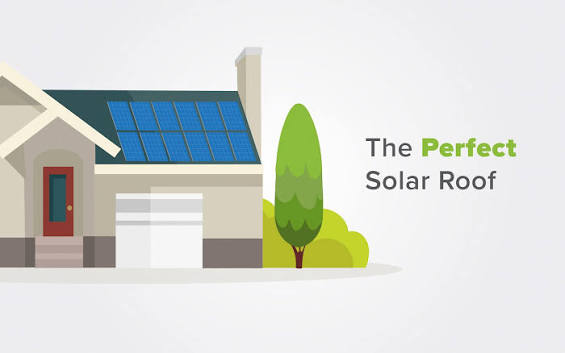
For years, solar panels have usually been treated as something added to a building after everything else has been decided.
The house is designed. The roof goes on. Years later, somebody arrives with a set of panels and works out where they can be fitted.
That approach is beginning to look increasingly outdated.
As solar becomes a more common feature of British homes and commercial buildings, there is a strong argument for considering it at the same time as the roof itself. Orientation, waterproofing, drainage, access, fixings and the expected lifespan of the roof covering all affect how successful a solar installation will ultimately be.
The question is shifting from “Can we put solar panels on this roof?” to something more useful: “How should this roof be designed if we know solar is going to be part of it?”
The roof and the solar system have very different lifespans
One of the most obvious problems with retrofitting solar is also one of the easiest to overlook.
Panels are expected to remain in place for a long time. If the roof beneath them is already approaching the point where substantial repairs or replacement will be necessary, the two maintenance cycles can clash.
That can leave a homeowner paying to remove panels, repair or replace the roof and then reinstall the solar equipment.
It is not an argument against solar. It is an argument for looking at the whole building before installation begins.
If a tiled roof is already showing significant deterioration, fitting panels over the top does not make that deterioration disappear. Likewise, installing a large solar array over an ageing flat roof membrane can complicate work that might otherwise have been straightforward.
The sensible starting point is therefore the condition of the roof itself.
Orientation suddenly matters for more than appearance
Architects and roofers have always considered orientation, but solar adds another dimension.
The direction a roof faces, its pitch and the amount of usable unshaded space can influence the effectiveness of a solar installation.
On a new building or substantial refurbishment, those factors can potentially be considered much earlier.
A slight change to the roof design may create a larger usable area. Plant equipment on a commercial building might be positioned differently. Rooflights can be planned around potential solar zones rather than competing with them later.
None of these decisions necessarily transforms a project on its own.
Together, they can make the roof much easier to use efficiently over its lifetime.
Surrey presents an interesting challenge
Across Surrey and the wider South East, there is no single typical roof.
Victorian and Edwardian properties sit alongside post-war housing, modern developments and large detached homes that have been extended several times.
Then there are converted barns, commercial estates, schools, offices and industrial buildings.
Solar suitability varies enormously between them.
Mature trees are particularly relevant locally. The leafy surroundings that make areas of Surrey attractive can also create significant shading at different times of day.
That means simply identifying a large south-facing roof is not enough. The surrounding environment matters too.
A roof that appears ideal at midday in August may receive very different levels of sunlight during a winter afternoon.
Solar should not compromise waterproofing
However useful the equipment installed above it may be, a roof still has one fundamental job.
It has to keep water outside the building.
Solar installations introduce additional considerations because panels require support, fixing or ballast depending on the system and roof construction.
Any interface with the roof needs to preserve the integrity of the waterproofing.
On pitched roofs, that means understanding the covering and the structure beneath it rather than simply treating tiles as a convenient mounting surface.
On flat roofs, the relationship can be even more important.
Modern roofing services increasingly have to consider what will eventually sit on the roof as part of the original specification, particularly where renewable technologies are planned.
Getting those decisions right at the beginning is much easier than correcting conflicts afterwards.
Flat roofs offer enormous potential
Large flat roofs are particularly attractive for solar because they can provide substantial usable space without significantly changing the appearance of a building from ground level.
Commercial premises are an obvious example.
Warehouses, offices, retail units and industrial buildings can have roof areas measured in thousands of square metres. That is potentially valuable space in a world where businesses are looking for ways to reduce energy costs and generate more electricity on site.
But covering a commercial roof with equipment also changes how that roof needs to be maintained.
Technicians still require safe access.
Drainage outlets need to remain clear.
Waterproofing needs to be inspectable.
Rooflights and smoke vents must continue functioning as designed.
Future repairs need to be possible without dismantling unnecessarily large sections of the installation.
Good design considers those requirements before panels arrive.
Drainage cannot become an afterthought
British roofs need to deal with increasingly variable conditions.
The same roof can experience prolonged dry weather followed by intense rainfall within a relatively short period.
Anything installed above the roof has the potential to influence how debris accumulates and how easily maintenance teams can reach drainage points.
On a flat roof, blocked outlets can cause water to pond. If solar equipment makes those outlets difficult to inspect, a relatively simple maintenance problem can become unnecessarily complicated.
This is another reason why solar and roofing design should be considered together.
The objective should not simply be fitting the greatest possible number of panels into the available area. A roof still needs to function as a roof after the installation is complete.
Commercial property owners have more to consider
For businesses, solar can form part of a much wider property strategy.
Energy generation is one consideration, but so are maintenance costs, insurance, access, future refurbishment and business continuity.
If the roof beneath a proposed solar installation requires replacement five years later, the financial calculation changes.
Conversely, if a business is already planning substantial commercial roofing work, that can be an ideal opportunity to consider how the new roof might accommodate solar during its expected service life.
The two projects do not necessarily need to happen simultaneously.
The important thing is that one does not make the other unnecessarily difficult.
Modern membranes can form part of the solution
The evolution of flat roofing systems also gives designers more options than they had in the past.
High-performance single-ply membranes can provide durable waterproofing across complex roof areas while accommodating the detailing required around penetrations, upstands and other features.
Systems such as Alwitra Evalon roofing are particularly relevant where architects, contractors and property owners are considering how a flat roof will perform alongside modern building technologies.
Again, specification matters.
No roofing product should be selected simply because solar panels are planned. The building, roof construction, expected traffic, drainage requirements and intended lifespan all need to be considered together.
Maintenance access is easy to forget on paper
A beautifully organised roof plan can look very different after twenty years of real-world use.
Leaves arrive.
Gutters need clearing.
Rooflights require maintenance.
Electrical equipment needs servicing.
A small section of waterproofing may need investigation.
If every available square metre has been filled without considering how somebody will actually move around the roof, routine maintenance becomes more difficult.
This matters on houses, but it becomes particularly important on commercial buildings.
Solar panels may remain in place for decades. Designing sensible access routes from the beginning can make maintenance safer, quicker and less disruptive throughout that period.
Existing homeowners should not be put off
None of this means solar only makes sense on a new roof.
Millions of existing British properties may be perfectly capable of accommodating panels.
The point is simply that the roof deserves proper consideration before installation.
A homeowner does not need to become an expert in roofing construction. They do, however, need to know whether the roof is in suitable condition and whether obvious repairs should be completed first.
If tiles are repeatedly slipping, leadwork is failing or there is evidence of historic water ingress, those questions are worth resolving before covering a significant section of the roof with solar equipment.
Spending money on the surface beneath the panels is considerably less exciting than buying the panels themselves, but it may prove just as important.
Roofs are becoming working parts of buildings
Perhaps the bigger change is philosophical.
For much of modern construction history, roofs have largely been regarded as protective coverings. Their purpose was to keep the weather out, provide insulation and occasionally accommodate a chimney or aerial.
That role is expanding.
Roofs are becoming locations for electricity generation, green infrastructure, rainwater management, heating and cooling equipment, communications technology and usable outdoor space.
Commercial buildings are already demonstrating this change, but residential properties are following.
It means the roof can no longer always be designed independently from everything that might eventually be placed on it.
Think about the next 25 years
A roof installed today could still be protecting the same building several decades from now.
During that time, the way we generate and use energy is likely to continue changing.
Nobody can predict exactly what technology will eventually occupy our rooftops, but designing buildings with flexibility in mind is sensible.
For homeowners planning a new roof, extension or major renovation, that might simply mean asking about solar before the roofing work begins.
For developers and commercial property owners, it may require a much broader conversation involving roof design, structural loading, waterproofing, drainage, access and energy strategy.
Either way, solar is becoming too important to remain something considered only after the roof has been finished.
The best time to ask whether a roof can accommodate the technologies of the future is not when somebody arrives to install them.
It is when the roof itself is being designed.
About the Author


